Thursday, January 14, 2016

The Girl Made of Halos (a poem)

Rings started at her feet, on her toes, squeezing her ankles, piercing her naval and lips and nose.
She wore bare fingers.
Golden curls crowned her skull, on her scalp, surrounding her eyes, radiating her disposition and genes and pose.
They were some singers.
Hula hoops swayed on her body, on her waist, swirling her arms, curling her neck and legs and elbows.
She was a girl of swingers.
Sharing halos, halos, halos.

She floated many over her head then.

Rings ripped at her skin, on the run, shredding her cartilage, disfiguring her above and below her naval and lips and nose.
Where were her fingers?
Golden curls circled her cranium, on the ground, splotching her purple and without her smile and eyes and clothes.
Where were the singers?
Hula hoops consumed her thoughts, on her mind, altering her day and ruining her youth and body and blows.
Was she of the swingers?
Chaining halos, halos, halos.

She wears one on her finger now.


Image Citation:
  • "Sad Flower Angel." Static Flickr. N.p., n.d. Web. <http://farm3.staticflickr.com/2570/4039454813_2385a3ebe3_z.jpg>.


Monday, January 11, 2016

An Ode To David Bowie

You were a starman, waiting in the sky,
An oddity in your labyrinth,
We joined your martian band,
You never looked quite the same, but we never failed to recognize you,
We'll miss your lightning struck face, Mr. Stardust,
Your art odyssey shall live on, for time can't change you.

"This is Major Tom to Ground Control,
I'm stepping through the door,
And I'm floating in a almost peculiar way,
And the stars look very different today."

We're sad to know you're past one hundred thousand miles,
And feeling very still,
We're hoping your spaceship knows which way to go without you.

This is Ground Control to Major Tom, signing off,
Your circuit is dead, and there's nothing we can do,
Caught under pressure without you,
No one could be heroes, but it was your day.

Now we jettison past your white dwarfs, a stranded crew with hopes that your blackstar will lead us through this uncertain galaxy.

**Borrowed Song Lyrics by David Bowie. (Jan. 8, 1947 - Jan. 10, 2016)**


                  R.I.S.
      (REST IN SPACE)


Image Citations:
  • "Aladdin Sane." New Gallery. N.p., n.d. Web. <http://991.com/NewGallery/David-Bowie-Aladdin-Sane-2123.jpg>.
  • "David Bowie." The Ventan. N.p., n.d. Web. <http://theventan.com/wp-content/uploads/2013/01/David_Bowie-06-e1357652458320.jpeg>.
  • "David Bowie." Every Record Tells A Story. N.p., n.d. Web. <http://everyrecordtellsastory.files.wordpress.com/2013/03/david-bowie-by-masayoshi-sukita-at-snap-gallery-keep-that-lectric-eye.png?w=700>.

Thursday, January 7, 2016

What Book Am I? (a poem)

looking like Genesis, acting like something missed,
skyscrapers rose in the world, toppling in his mind,
taking no name but his own, defying original description,
shooting questions with a semi-automatic mouth, functioning in rapid privacy,
welcoming the unwelcome, dethroning gods from foundation,

H.ad conundrums as his norm,
Robed in a dull fabric,
Overwhelmed by his own creation,
Advanced without advancement,
Rested in his run,
Killed even the sun,

He knocked down walls to build up with rubble.

A. Rebel Acting Nobody's Dreams


Monday, November 30, 2015

Where Are We Headed?

Walking into our schools, our teenage selves not only expect respect, but we demand it. Some will deny this, but the average confident teenager will show up already holding themselves with a certain attitude, whether that attitude be exemplary or pitiful. We, most of us filling the shoes of this role, hold our teachers to high standards based on these start-of-the-day expectations but sometimes leave class complaining about that very teacher we expect to deliver their foremost.
However, in my observations, I deduct that we students do not truly air complaints about our teachers the majority of the time. Our complaints are cloaked in a series of jabs at whichever teacher runs the classroom, but where are the complaints rooted? Do our teachers all deserve the blame if we are dissatisfied with our day to day classes?
While I’d be inaccurate to deem all educators works of faultless perfection, I believe that, at least in my school, there are talented teachers who mean well and do their absolute best. Still, my ears are littered with a daily barrage of grumbling new flaws about the same teachers I myself admire. They start here:
“She gave us homework again?” an incredulous whisper hisses snakelike and venomous under my teacher explaining the lesson plan to us. “Well, I had no idea. I don’t have it done.”
Or,
“Is he checking the reading notes today?” another despairs. “I only have a few pages to go! I got home so late last night!”
This may only paraphrase a mixture of student commentary from my school year so far, but it doesn’t change the subject matter. These students, all of them signed up in Advanced Placement courses alongside me, usually go on to badmouth our teachers when they can. Usually, these conversational groans of discontent are nothing that high school students take very seriously, just as long as the teacher doesn’t overhear them. After careful consideration to this viewpoint, I believe we must take our thoughts about our educators into more cautious consideration, for we are damaging ourselves through our actions. This session of complaint could be seen as a group of stressed high schoolers dropping a weight off their shoulders. I could understand that theory to an extent.
But do we have a weight so constant on our shoulders that we feel compelled to drop it at every chance we get? That is weak, and that is the purest form of laziness.
I choose now, after dissecting complaints of peers, friends and, at times, even that voice that lives in the back of every human mind (including my own), that this is a mere excuse for students with insufficient work ethics.
These are the students that want every bit of success their hands may grasp without any of the shoe leather it takes to walk ten miles across burning asphalt. These are the flip-flop students. These are the students that sign up for classes that will contribute towards a higher GPA, passing themselves off as the higher-minded and responsible while they don’t start their homework until ten o’clock at night.
Proof made itself in my AP Physics class. My classmates and I were assigned an egg drop project and had ample time to complete the project. My table mate, however, arrived for days later with no project. No visible remorse revealed itself. He just wanted to get out of trouble without receiving a bad grade or disapproving judgement. His next move was to text his mother, asking to be signed out. She managed to get there in time enough to bail him out of responsibility for his bad decisions. Similarly, there are reports of parents emailing teachers to request that teachers extend due dates on assignments that were due six weeks before. In a study by the Higher Learning Commission, a survey of college professors asked why they believed their students failed showed that thirty eight percent of cited responses said that the reason was that students were unprepared for college work. If near adult students can’t succeed in college and rely on their parents to “solve” their problems, what kind of morale are we building our workforce on? What kind of fiber? Who are these students in reality?
These students are, as a teacher once drilled into my skull, the students that double their odds of failure after high school because they “don’t do that hard stuff.” These students are, if they should succeed through college, the ones who get a job because they have a degree and do not develop a career that started when they earned their degree. According to The Washington Post, only twenty seven percent of recent college graduates have taken a career in the field their degree qualifies them for. Degrees and college tuitions are being wasted. Society is destroying the value of our education system.
My teacher may have seen the reality harshly and lectured us too fiercely, but I cannot admit that she is absolutely wrong, just as I cannot admit that all complainers are failures.
I can’t shake the thought from my head, of course, as I hear the complaining around my desk, and I wish I could turn off the voices of us students berating a valuable teacher and person. Maybe it would stop me wondering who will fail and who will lose or questioning the work ethic of myself and my peers. Such questions can offend and kill a chance at being liked in an environment like the one I muddle through. This overall mood needs someone questioning it, no matter what the consequences.
Because of this, I see a cycle of complaining about a decent, hardworking teacher instead of accepting personal responsibility as a grave character flaw that sets us up for failure in any academic endeavor. High test scores and GPAs are wonderful tidbits for a college application, but the application isn’t much more than a paper door to invite the best version of a student to start their life. If we choose to leave the best version of ourselves with our foot caught in that door, complaining that we can’t move forward because we’re stuck, we will never take another good step. Even if we manage to pull our foot from that door, we’ll always walk with a limp, wishing we had a some parental buttress or a crutch of excuses.
Take responsibility for academics now. Drop false blame with the crutch because it’s time a generation of high schoolers see the need to grow in not only our knowledge but our natures as well.
Or, I suppose, we may face our future as it will come, decades of a growing margin beyond that twenty seven percent. Our age is the time accept blame for our actions and affirm a no-excuses lifestyle to ensure our livelihoods, committing to more statistics ruling in our favor. It’s up to us.

Will we be the generation that failed to thrive or the generation that thrived in the face of failure?


Citations:

Sunday, November 1, 2015

Poisoned History

Haven't we all had a Dick Whitt?

A Dick Whitt is a term my own AP US History teacher, Mr. Borenstein, coined to describe a horrible history teacher with even worse teaching methods, taken from his own experiences with a Mr. Dick Whitt that tricked him into believing he hated history.

If I could guess correctly, we could all do a trace back into our school days to a history teacher that made us despise the subject, even if only for that school year. The cause itself of hating history is not specifically important. However, resenting history or believing that learning it is pointless is one of the central issues with our modern day high school students.

These students love to use terms such as "YOLO," meaning "You Only Live Once." Statements like this lead to many students choosing to live only in the moment without care for the world around or before them. Most of these students fail to realize or wonder about the application of our history to our development now. They certainly don't think about how the days of their lifetime will also be history eventually and that their achievements or lack thereof create the value of our generation for the future. If someone were to address these young adults as already being history, they may think that what they hate is more valuable than they knew a moment earlier.

Applying history to our life today is highly important, and we need to look for ways to convince students to acknowledge the value it holds.

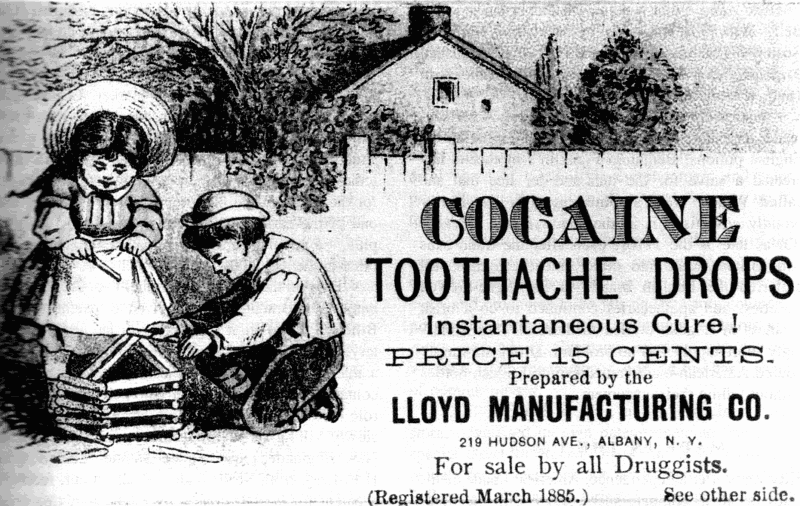
Addressing all we've learned from the Victorian Age is a perfect example. Early Victorian times were some of the most dangerous of Great Britain for its citizens. While they were on the right track in terms of innovation and demand for health products, it wasn't until the Mid-Victorian times that they began truly developing viable scientific knowledge about their lifestyles. In the beginning, the Victorian people weren't even aware that their treasured home environment had rampant bacteria, poisons and death traps waiting to take their lives. Their lack of knowledge led to 25% infant death rates along with arsenic and highly flammable --actually explosive-- celluloid in products ranging from color dyes and material in clothing to wallpaper and other common household accessories. The deadly chemicals were over-the-counter products without regulation. This allowed Victorians to purchase them regularly if they chose. During this time, children constantly died from overdoses on Boracic acid added to "freshen" milk or Bovine Tuberculosis in the drink from the very bacteria that made the sour taste the acid covered. Not all deaths from pharmacy purchases were accidental though. Convenient to obtain and undetectable in post-mortems, arsenic also spiked the number of murders by poison. Once a brute match, Victorian murder morphed into a game of chess, slow and agonizing for the losing party.

Most people don't think of these horrid times anymore. We've fixed those problems and no longer worry about such an ignorant and fearsome reality. Although that is true, our sense of awareness is slipping. As it slips, we find ourselves becoming essentially Victorian again.

We forget about one of the primary reasons to educate ourselves about the many faults of the past, prevention. Knowing about the twisted and adulterated ages without proper safety law that can stop us from falling back in time to negative reality. Recognizing faults in former societies can help us recognize the faults in our own. For instance, we no longer have dangers such as Boracic acid and tuberculosis carrying germs in our milk. Does that somehow prove our milk is safe? Are modern additives like the hormone RBHT in dairy or estrogen in soy safe to ingest in large quantities? Not to mention that the majority of people who love buying new t-shirts probably couldn't tell you what the factories used to dye their clothing. We assume, as the Victorians foolishly did in their time, that our most popular items are safe. As a result, we choose to deny and ignore stories with claims that certain foods lead to deadly diseases such as diabetes and cancer.

Choosing to acknowledge and apply history is choosing to avoid ignorance in our own lives. It's our duty and obligation to make our next generation aware of the importance of the past to our future if we want our race to continue moving forward and lasting. First, we must note that we are flawed, and then, we must transform into preachers of reform. We must search for everyday changes to build up modern industry and health where it lacks and set the example for our students. Otherwise, they will continue to believe there's no reason to listen in history class, but they will have every reason to accuse us of absolute hypocrisy.

While the undeniable truth is that we "only live once," we should want the world we leave behind to live forever.

Citations:
  • "Cocaine Tooth Drops." N.p., n.d. Web. <http://upload.wikimedia.org/wikipedia/commons/9/99/Cocaine_tooth_drops.png>.


Monday, October 26, 2015

Do Electronics Damage Independent Thought in Our Youth?

All around my high school, I hear voices repeating all they've seen or heard through media. Jingles quoting Rick Asley's Never Gonna Give You Up, SpongeBob's The F.U.N. Song and Taylor Swift's Shake It Off bounce through the halls. Even obscure, nonsensical shouts of "JOHHHHNNN CEENNA!" echoed in my ears one class period when my teacher stepped out of the room for a moment.

Sometimes, we get the reference, remember something rather funny and laugh it away. Other times we get annoyed to the point of grinding our teeth and form fantasies of whipping around to growl two simple words, "Shut up,"

Where do we get these odd coined phrases, and why do we feel compelled to repeat them? Ask any person, and they'll shrug and say that it's funny. However, the media could actually imprint the things we find "funny" onto our memories to the point we think of them first instead of formulating an original conversation starter.

While it's true that simple "gifs," "memes" and references implanting in memories are rarely dangerous, technology's lasting footprint on our brain has far worse effects. Recent studies find that the way we depend upon our devices actually alters the composition of our brains when it comes to simple problem solving situations.

Technology wires some students so much that they fear math without a calculator and believe themselves incapable of strong mental solving skills. Technology is in our classrooms, in our phones and at our fingertips, leaving elementary principles such as simple multiplication tables up to twelve or carrying digits in the dust.

When I listened to my fellow classmates after we finished our PSAT, I heard scattered but constant claims of this:

"I BOMBED that part without the calculator. I didn't get any of that."

What does this mean for these students in college if they don't change now? Being average or lower at math is a curse when that calculator is inches away, making your hand itch to grab it.

To my surprise, I recently discovered that the calculator curse doesn't only affect the struggling and average students negatively.

Just last week, when I attended Math Honors Society tutoring, FIVE tutors said that they couldn't tell me how to solve my homework problem without a calculator. I protested immediately to their solution that I could just punch it in because my teacher wouldn't allow a calculator on my midterm the next day.

I received a frown and an "I don't know what else to do," before they began wracking their brains for the lost lesson they failed to retain.

Thirty minutes of internet searches and five minutes of explanation later, I finished two problems with a tutor. It bothered me to the bone. They were the best math students in my school, recognized for their achievements, and even they preferred the supposed lesser of two evils. Developers of the device like Willhelm Schickard and Blaise Pascal invented calculators to assist mathematicians, not act in their place. Our modern times are proof that their meaning is butchered, along with those of countless other inventors.

This leads me into an article titled Why Johnny Can't Add Without A Calculator. The author offers many valid criticisms towards technology's effect on human skill level but puts their main point quite simply:

"Math and science can be hard to learn--and that's OK. The proper job of a teacher is not to make it easy, but to guide students through the difficulty by getting them to practice and persevere."

The logic itself is simpler than its application. We need to instill in our students that they must build up their problem solving stamina and creativity to look for different solutions on their own without pounding endlessly away on plastic buttons. Encouraging the study and memorization of the in-depth details is better for students in the long run. It will take longer to teach and learn. Despite that, it will stop embarrassing moments like the aforementioned incident of the five honors students.

We want our students confident in problem solving and their ability to think for themselves. The best way to mold our future complex thinkers and innovators for success, while preserving their dignity along the way, is to wean them off using technology as a first resort instead of as a necessary one.


Citations:

  • Kakaes, Konstantin. "Why Johnny Can’t Add Without a Calculator." N.p., n.d. Web. 26 Oct. 2015. <http://www.slate.com/articles/technology/future_tense/2012/06/math_learning_software_and_other_technology_are_hurting_education_.html>.
  • "The History of the Calculator." The History of the Calculator. N.p., n.d. Web. 26 Oct. 2015. <http://www.thecalculatorsite.com/articles/units/history-of-the-calculator.php>.
  • "The Struggle For Productive Struggle." Emergent Math. N.p., n.d. Web. <http://emergentmath.files.wordpress.com/2012/12/calvinandsusie.jpg>.


Monday, October 19, 2015

Great Expectations or Just Unrealistic?

                In our age of higher education standards and helicopter-parenting, do we pressure our students to unnecessary extremes to reach what we believe is the modern definition of success? Never before have we given our young learners so many opportunities to learn at a higher level, but never before have we expected them to soar so closely to excellence. New queries and studies revolve around a central question: Is this newfound stress thrust upon those enthusiastic, overachieving and approval seeking students the right way to create a future?
                Not all students fit the bill of the adjectives used above, but every student who enrolls in one or more of these higher level classes has a drive to succeed. Some quake under the pressure, while others find alternate but not always healthy ways to deal. A lucky group finds itself motivated by the atmosphere of demands and difficulty. Avoiding anxiety is virtually impossible for any human being, especially a teenager.
                Our modern and ever-changing methods of testing and how we define achievement have exceeded reason. In some cases, they may create unhealthy environments for our youth population.
                For example, an article entitled High-Stress High School documents the specific rigorous and Advanced Placement courses a private school offers. Parents spend an average yearly sum of ten thousand dollars so their children have opportunities such as sports, music, student government and SAT Prep all while attending the top schools.
                The article quickly moves past listing the benefits of the schools, stating this about these "best options": "'These experiences can cause kids to burn out by the time they get to college, or to feel the psychological and physical effects of stress for much of their adult lives,' says Marya Gwadz, a senior research scientist at the New York University."
                How can we say that we are only providing our children with the best if we put their future successes on the line to do it? For what is a college admissions essay backed by the perfect SAT and ACT scores if less than 2/3 of all college students graduate? The intensity that high school students work at today has the potential to destroy their functionality by the time they try to decide their future. This is what Gwadz means using the term "burn out" when she describes the effects of our all around attitude towards this issue.
                Today we define success as working as hard and as long and at the highest level we can without failing to meet the standards of a system. The flaw is, this system is built upon how everyone around an individual manages. Instead of success being weighted by understanding of concepts as a whole, it's weighted through tests and lining up grade by grade in comparison.
                Students should have high expectations and challenges at all times because, without these in life, they do not know how to learn, especially in the face of a challenge far greater than what you learn in school. Expecting perfection in every area of a student's life is not the same as this though. It is essential for our future that we learn this early on, so students don't continue developing bad habits that harm their learning more than help it.

Citations:
  • "High-Stress High School." N.p., n.d. Web. <http://www.theatlantic.com/education/archive/2015/10/high-stress-high-school/409735/>.
  • "College Dropout Statistics." N.p., n.d. Web. <http://www.collegeatlas.org/college-dropout.html>.